
What happened?
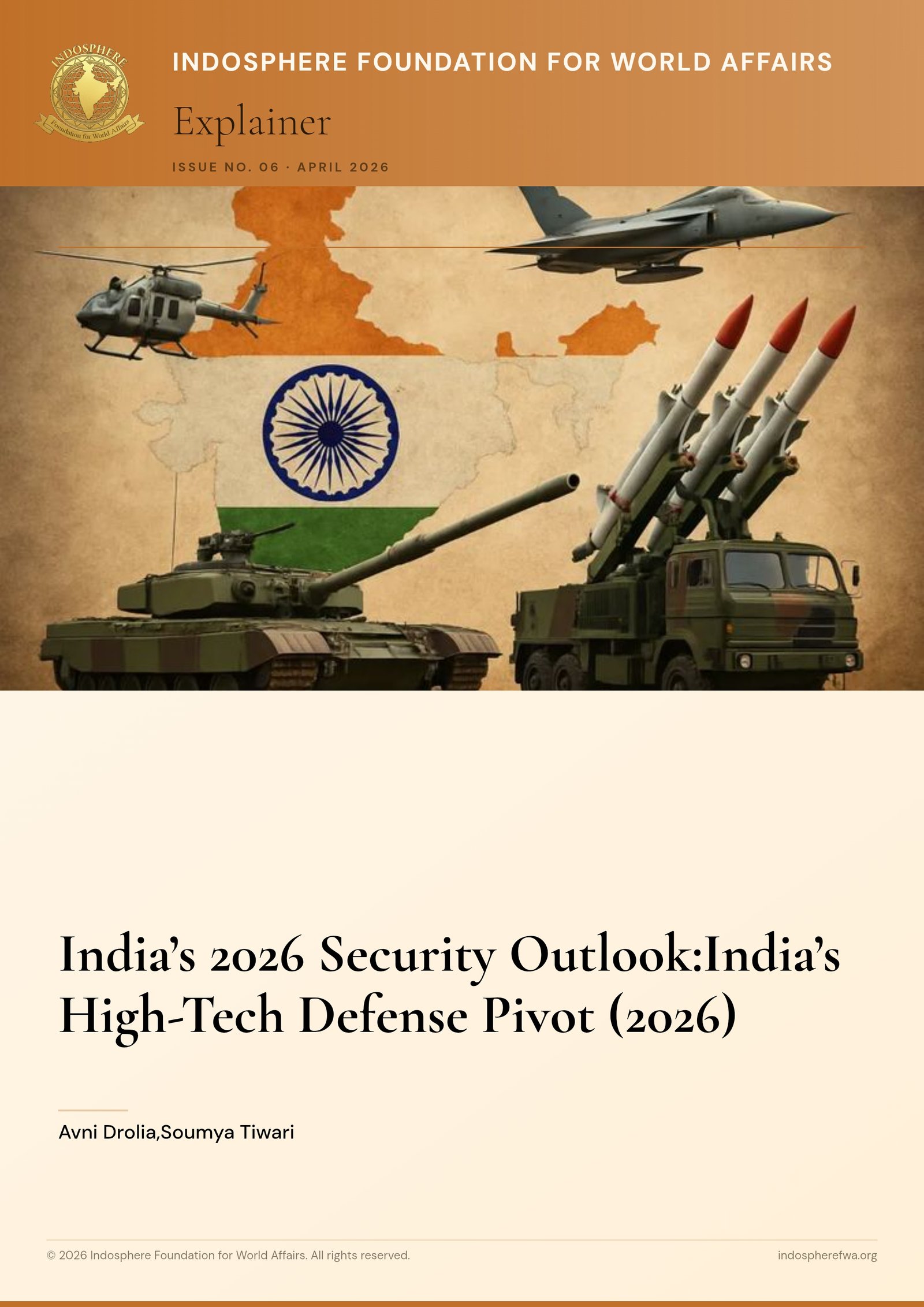
In a significant victory for India's aspirations of self-reliance, the fiscal year 2025-26 marked a remarkable milestone for the defense sector, witnessing a record high in exports reaching ?38,424 crore (approximately $4.6 billion). This surge of 62.7% in just one year showcases India's transition from being solely a buyer to a prominent player in the global market.The shift happening now is really about the products we are offering. In the past, India mainly exported small components and ammunition. But today, the global market is showing interest in our more advanced and substantial hardware. We have elevated our position in the industry to export fully integrated, high-tech systems such as the BrahMos supersonic missile, the Akash air defense system, and Pinaka rocket launchers.With more than 85 countries now showing interest in Indian technology, ranging from the Philippines to Armenia, the statistics paint a clear picture: our public and private sectors are now working together effectively. With 145 active exporters, India has successfully transitioned from being a mere component-maker to emerging as a leading global defense player.
Why it matters?
India’s defence export surge translates directly into strategic leverage. By supplying advanced systems like BrahMos missile and Akash air defence system to countries in Southeast Asia and Africa, India strengthens long-term security partnerships thereby offering an alternative to China’s infrastructure-led influence. These defence ties deepens interoperability and political alignment. Economically, the exports generate economies of scale thus lowering per-unit production costs for domestic forces, a principle widely noted in defence economics literature. This reduces procurement burdens on the Indian military while sustaining industrial growth. Consequently, exports are not just commercial gains but tools of geopolitical positioning and fiscal efficiency.
Background
India’s defence transformation shows a shift from “Made in India” to “Owned by India”, institutionalised through evolving procurement frameworks like the Defence Acquisition Procedure 2026. This policy prioritises indigenous design, development and manufacturing. Simultaneously the initiatives such as Innovations for Defence Excellence (iDEX) have integrated startups into national security especially in border management. Therefore instead of relying solely on physical infrastructure, India has embraced “digital walls”, AI-enabled surveillance, drone swarms, sensor networks etc. along the Line of Actual Control. Scholarly research highlights this as a shift towards technology-driven deterrence thus combining public-private collaboration with innovation ecosystems. This evolution underpins India’s emergence as a technologically capable and strategically autonomous defence actor.
What are the implications?
India’s defense achievements go beyond financial investment; it involves a complete reevaluation of how we safeguard our borders and assert influence on a global scale. When comparing infrastructure with technology, it is evident that China has focused on building physical structures like roads and airports along the LAC for many years. And in response to this India has shifted its strategy towards a "Technology-First" approach as a deterrent. We keep a close eye on the border using AI drones, thermal sensors, and high altitude surveillance technology. Instead of just trying to match China’s large-scale approach, we’re using advanced technology to observe and outmaneuver them effectively in real-time. A Preferred Option: India is increasingly seen as the ideal choice for countries such as Armenia or the Philippines. They desire cutting-edge technology while being cautious of the political conditions attached to US equipment, the supply challenges with Russian tech, and the potential risks of falling into a "debt-trap" with Chinese deals. India provides a transparent, democratic alternative that is not only battle tested but also cost-effective. Top-tier Player India has joined the prestigious “Tier-1” club by successfully exporting complete systems such as the BrahMos and Akash. In a world shifting away from traditional powers, India is now recognized as a reliable, technologically advanced center capable of developing, constructing, and bolstering the future of global security.
What next?
To achieve the ambitious target of reaching a ?50,000 crore export goal by 2028, India must pivot its attention from solely manufacturing parts to tackling its "brain and heart" challenges. One significant hurdle we are currently encountering is the "Engine Gap." Despite the excellence of our Tejas fighter jets, they are dependent on an American engine - the GE engine. This reliance forces us to seek approval from Washington before we can sell to other countries. The groundbreaking agreement in 2026 to produce GE F414 engines in India is a game-changer that will help us establish genuine technological independence. Moreover, India is currently developing a Defense Export Credit Agency. Imagine it as a financial connection; numerous countries are interested in our technology but require adaptable payment options. Through providing attractive financing options, we can rival the substantial resources of major global companies. By overcoming these challenges, achieving that ?50,000 crore milestone is not merely a vision - it is a strategic assurance.
References
Ministry of Defence. (2026, April 2). India’s defence exports jump 62.66 percent in FY 2025-26 to touch an all-time high of Rs 38,424 crore. Press Information Bureau, Government of India. https://pib.gov.in/PressReleasePage.aspx?PRID=2248124
Observer Research Foundation (ORF). (2026, February 19). Institutionalising India’s defence diplomacy in Southeast Asia under Act East. https://www.orfonline.org/expert speak/institutionalising-india-s-defence-diplomacy-with-southeast-asia-under-act-east
International Journal of Novel Research and Development (IJNRD). (2026). Using technology for India’s border surveillance and developing Vision 2047. https://ijnrd.org/papers/IJNRDG001002.pdf
PRS Legislative Research. (2026, February 17). Demand for grants 2026-27 analysis: Defence. https://prsindia.org/files/budget/budget_parliament/2026/DfG_Analysis_2026-27-Defence.pdf