
As we enter the twenty-first century, a new set of challenges has emerged for multilateralism and the continued existence of the Western-dominated world order. The growing number of developing countries is becoming increasingly frustrated by the lack of representation from the West within these Western-backed organizations, which have historically served to reinforce existing power structures and limit opportunities for growth and development. On the other hand , BRICS( Brazil, Russia, India, China , South Africa) has established itself as a strong coalition of the countries of the global south . It serves collective cooperation between the member countries . Since its formation in 2006, the BRICS has adapted a positive trajectory of development resulting as an alternative of the western based institutions. India’s chairmanship of the BRICS, as it enters its third decade of establishment ,is an important milestone which shall define the future trajectory.
Broadening the Scope: From Economic Coalition to Global Community.
BRICS was created as a way to showcase the growing economic power of Brazil, Russia, India, and China (the founders). Since South Africa's admission to BRICS in 2010, the group has expanded significantly. Today, BRICS is one of the largest platforms for developing countries' collaboration on areas such as economic policy, development finance, and reform of global governance. India is positioning us as a significant player in the shaping of BRICS in 2026.
BRICS under India’s presidency : Vision and Theme
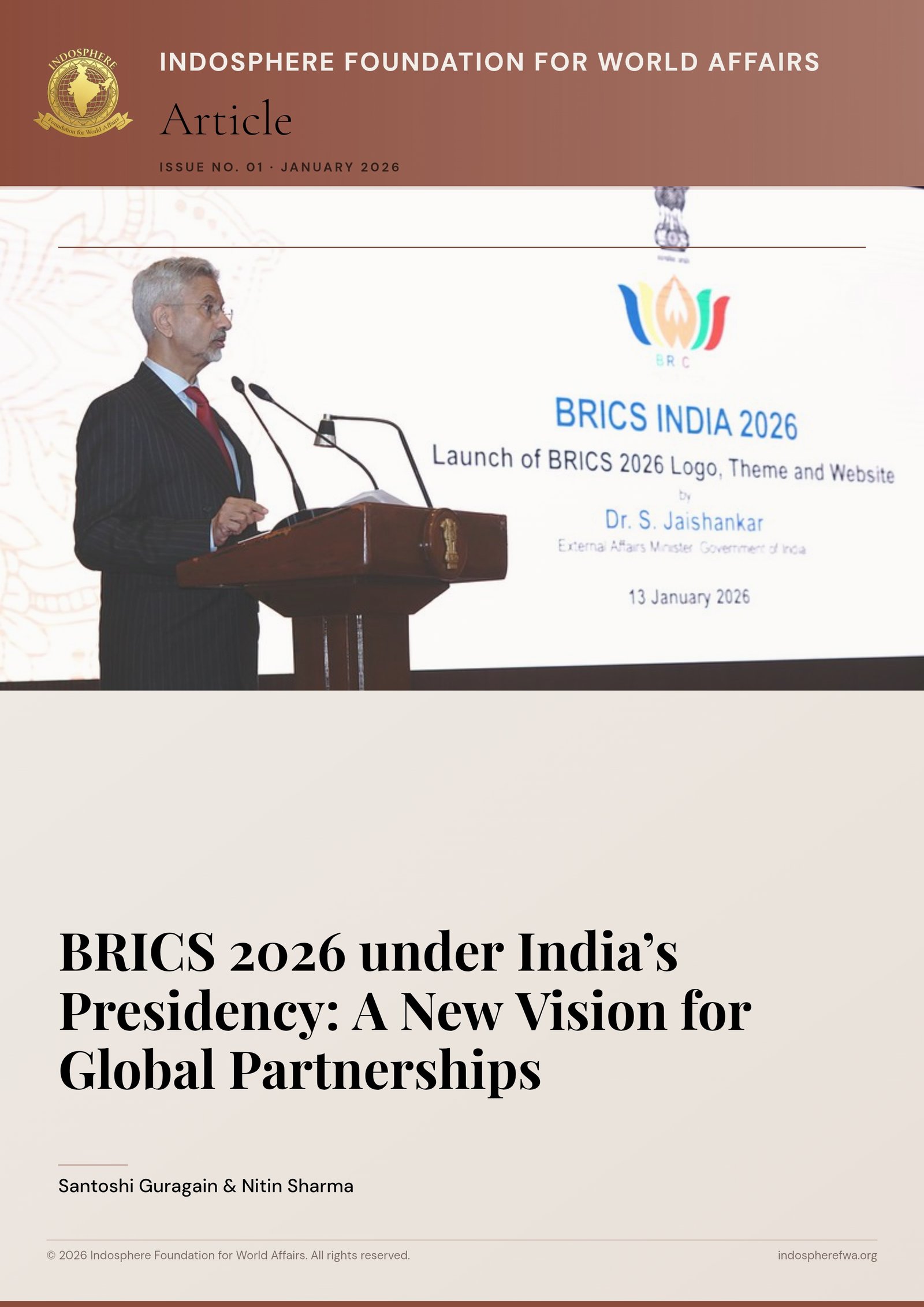
India’s Minister of External Affairs, Dr. S Jaishankar unveiled the official logo of BRICS India 2026, along with an official website on 13th January 2026 at New Delhi. India's vision encompasses a redifined idea of the acronym. BRICS under India’s Presidency stands for “Building for Resilience, Innovation, Cooperation and Sustainability," with a special focus on People centric and humanitarian approach.
The theme reflects India's commitment to ensuring that BRICS Members establish economic co-operation in practice and benefit citizens from each member State via numerous means. Furthermore, India's presidency is anchored in the philosophy of placing people at the centre of multilateral engagement, along with their welfare, innovation-based growth, and common sustainability.
India has identified four priorities in its Agenda for BRICS 2026 Presidency to enable BRICS to become increasingly focused on delivering value to those it represents -
- Resilience: Strengthening socio-economic and institutional capacities to withstand global crisis such as pandemics, supply-chain disruptions, climate risks, and financial volatility.
- Innovation: Promoting digital public infrastructure, emerging technologies, AI, and inclusive technological adoption to facilitate an equitable and future oriented development.
- Cooperation: Enhancing policy coordination, trade facilitation, development finance, and people-to-people linkages among member nations.
- Sustainability: Fostering environmentally sustainable growth through climate action, energy transitions, green finance, and holistic development pathways.
Official remarks made at the launch emphasize that these pillars will provide a coherent framework across BRICS’ political, economic, and socio-cultural streams of cooperation.
Symbolism and Institutional Innovation
The BRICS India 2026 official logo, unveiled alongside the theme, symbolizes unity in diversity and the collective strength of member nations. Designed to convey inclusivity and mutual respect, the logo’s color palette and motifs reflect India’s effort to blend tradition with modernity, while underscoring BRICS as a forum grounded in shared purpose.
Complementing this visual identity is the official BRICS 2026 website (brics2026.gov.in), which serves as a central digital platform for disseminating summit information, official documents, meeting schedules, and outcome reports transparently.
Contextual Significance and Strategic Timing
As the 20th anniversary of BRIC was marked, India is proud to lead these countries through the formation of BRICS, a new international organization that now plays a significant role in international relations on a global scale. As the world enters a time of increased geopolitical competition, changes in the dynamics of the world's economies, and an increase in the need for collective action around shared global challenges, the presidency of India will take advantage of BRICS as a forum to advance the causes of more inclusive and effective global governance.
Also, highlighting the importance of increased commitment by BRICS leaders to reformed multilateralism, External Affairs Minister Jaishankar stated that it is imperative that there are changes to international institutions in order to achieve adequate representation and fairness for emerging market economies.
India’s Strategic Imperatives and Global Leadership
Leading BRICS in 2026 is a strategic opportunity for India to expand its diplomatic influence and build deeper economic partnerships while promoting the agenda items important to the Global South. By focusing on issues like digital innovation, sustainable development, and the resilience of economic systems, India will project an assertive yet collaborative leadership and vision at multilateral forums.
Additionally, India can leverage its presidency as an opportunity to harmonize its BRICS agenda with other global commitments, including Sustainable Development Goals, climate finance, and the fair and equitable governance of technology; all three have developmental goals closely aligned to India's policy priorities.
This leadership shall equip India an opportunity to build a lasting confidence for itself and provide the rest of the world yet another example of the emerging global leader that India is.
Conclusion: A Forward-Looking Presidency
The BRICS 2026 Chairmanship signifies that the nature of multilateral engagements is moving away from formal cooperations to strategically focused, people-centric engagements. Through its leadership position and initiatives, India will work collaboratively on behalf of its members to give BRICS members a common voice global safety net, strengthen all sectoral cooperation (social, economic, and environmental), establish globally recognized direct global partners, re-establish and enhance the BRICS framework of institutions, and build a sustainable future together as close allies.!
An example of its sincere focus on 21st-century challenges, such as global economic instability, climate change, and the technological divide, the BRICS presidency will provide developing and emerging economies with a vision that will fit their aspirations, reflect empathy and equity, and forge together towards collaborative growth for all.